The EYE ABOVE THE WELL
Agial Gallery. BEIRUT. (2015)
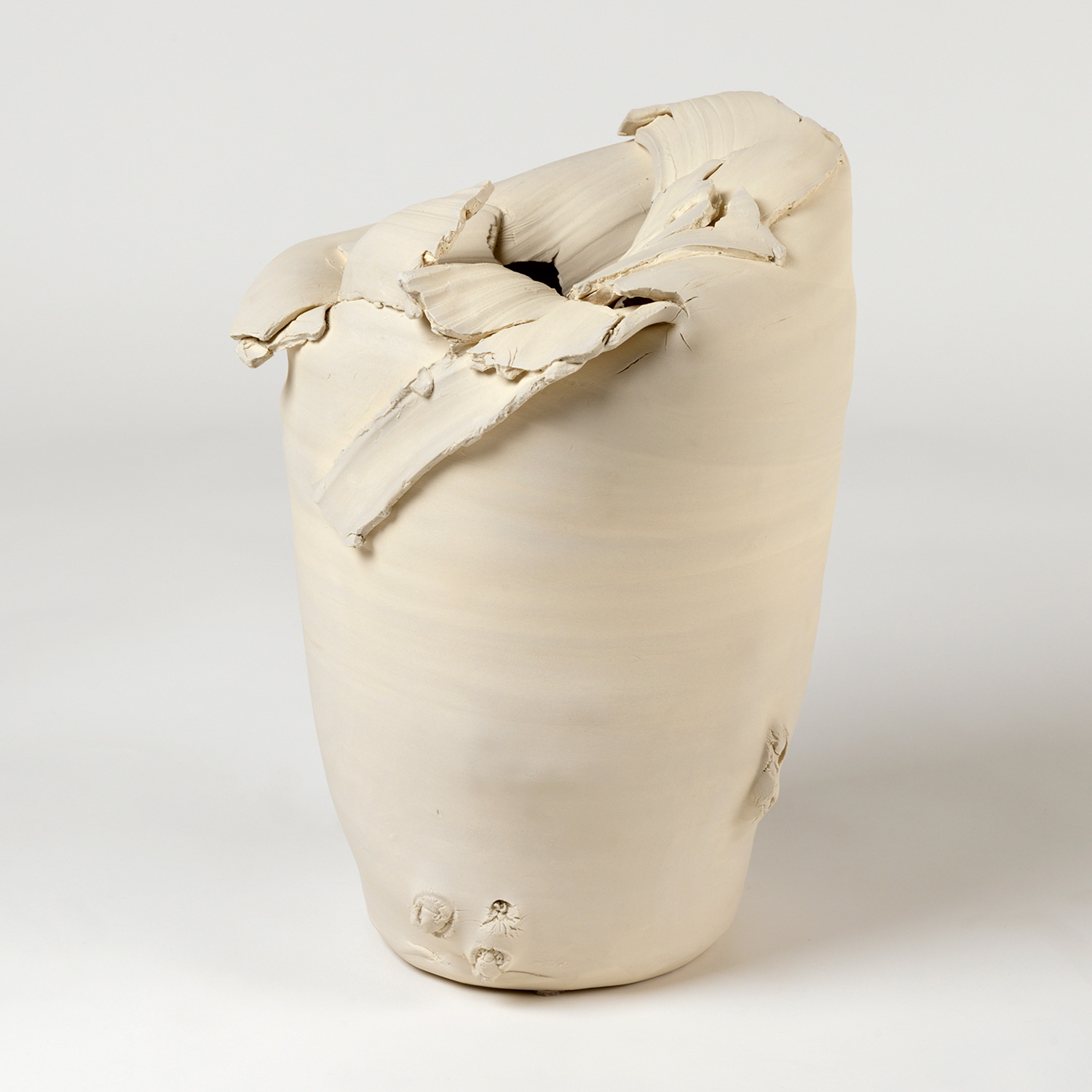
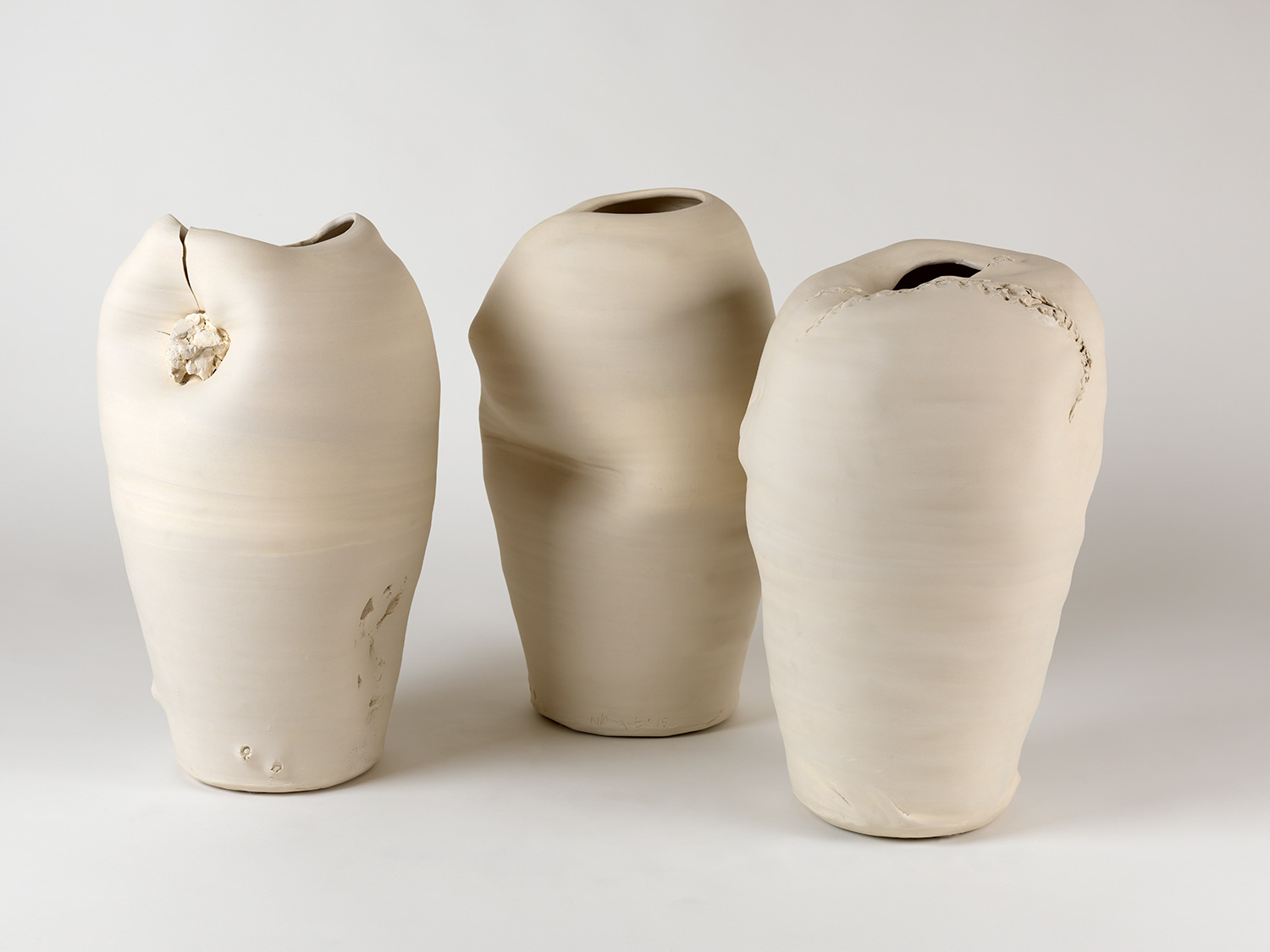
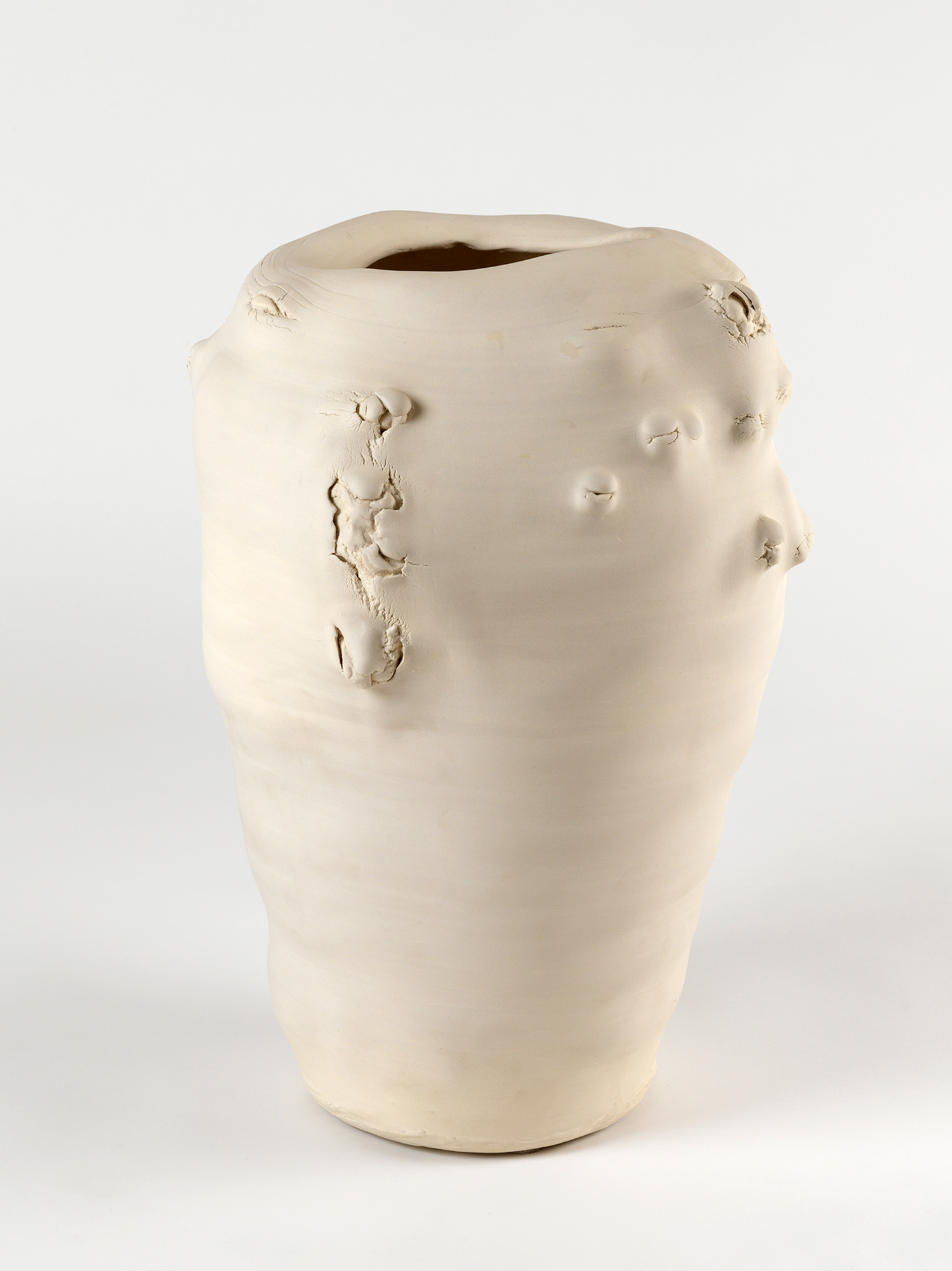
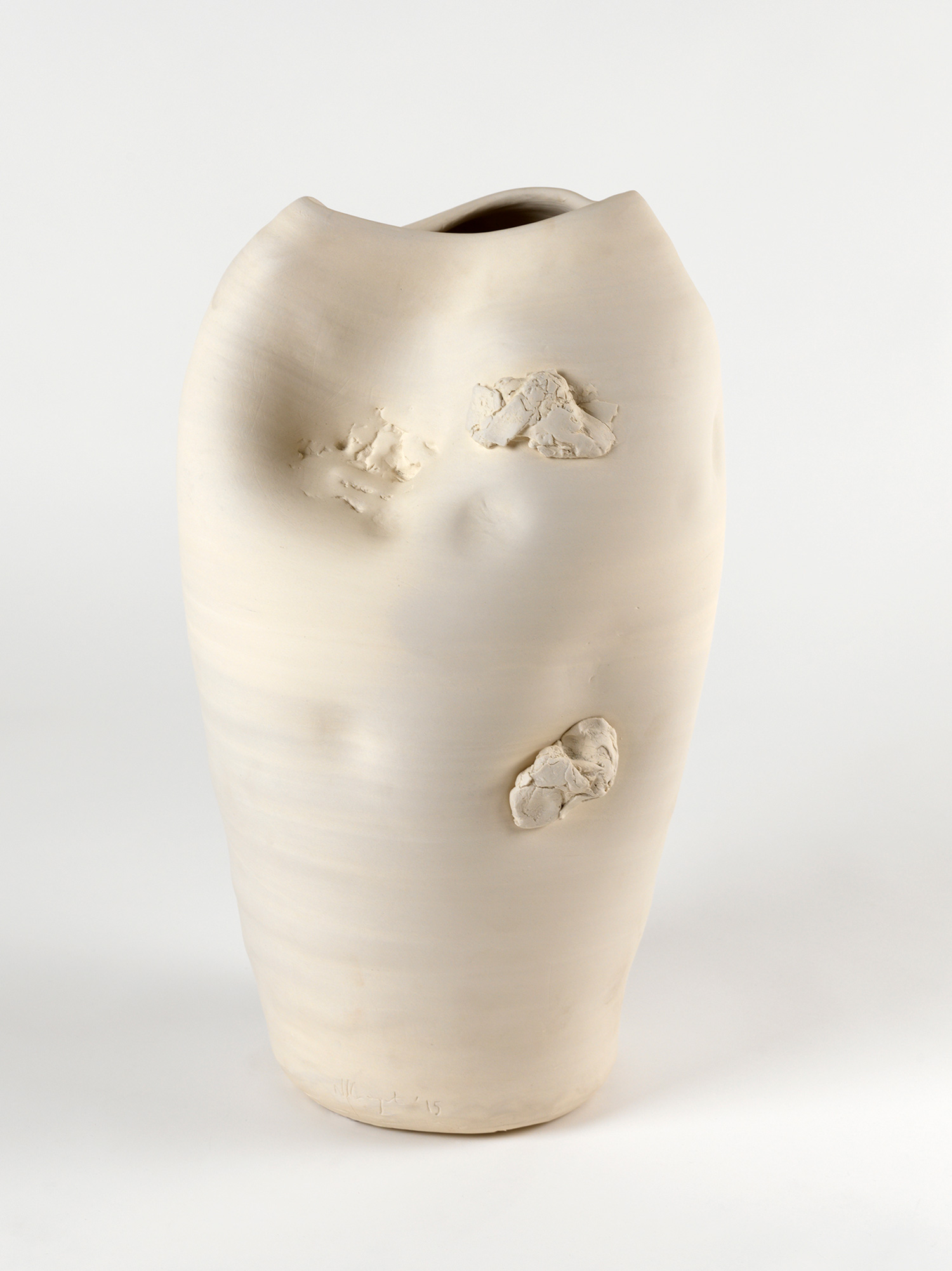
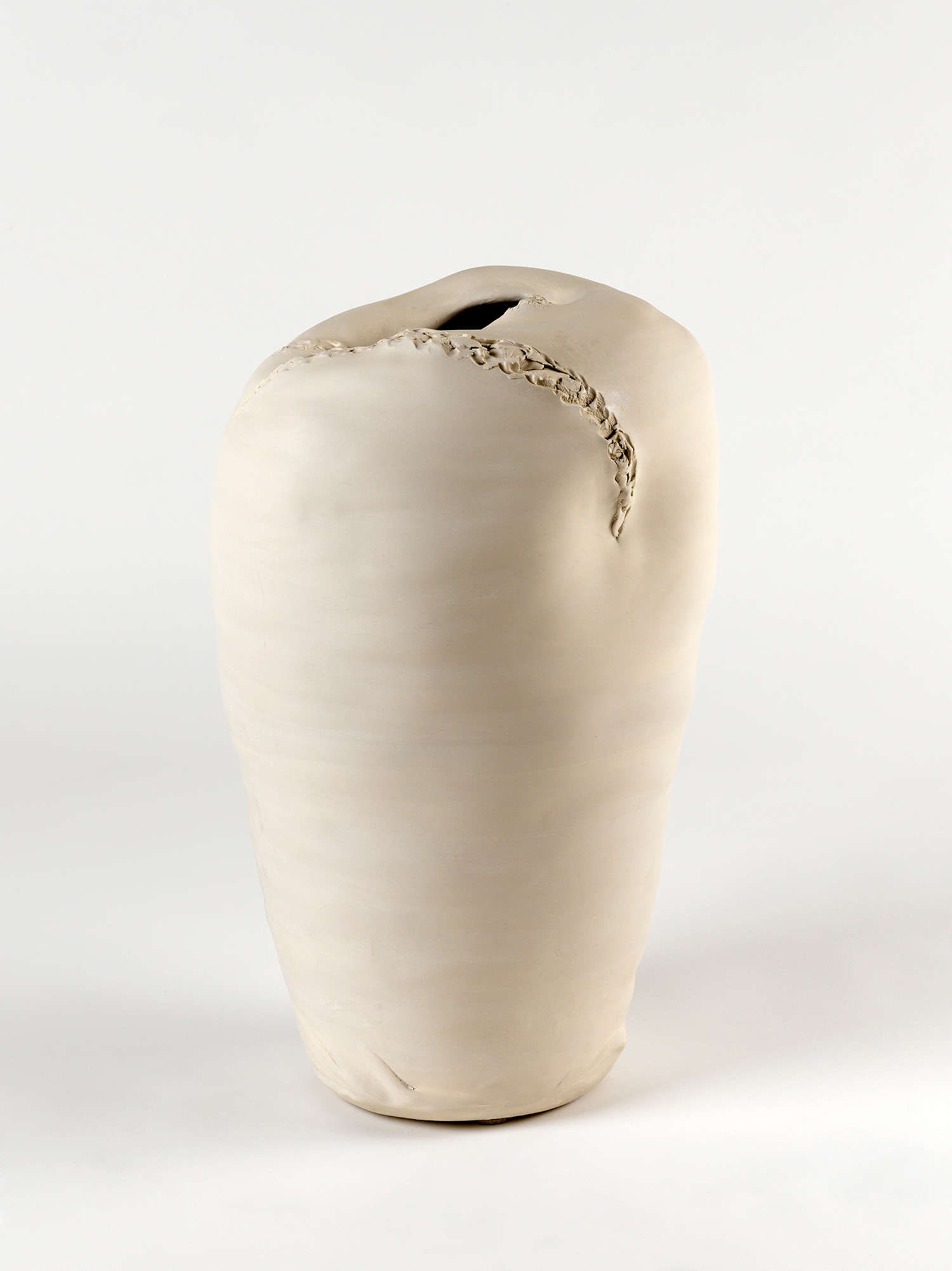
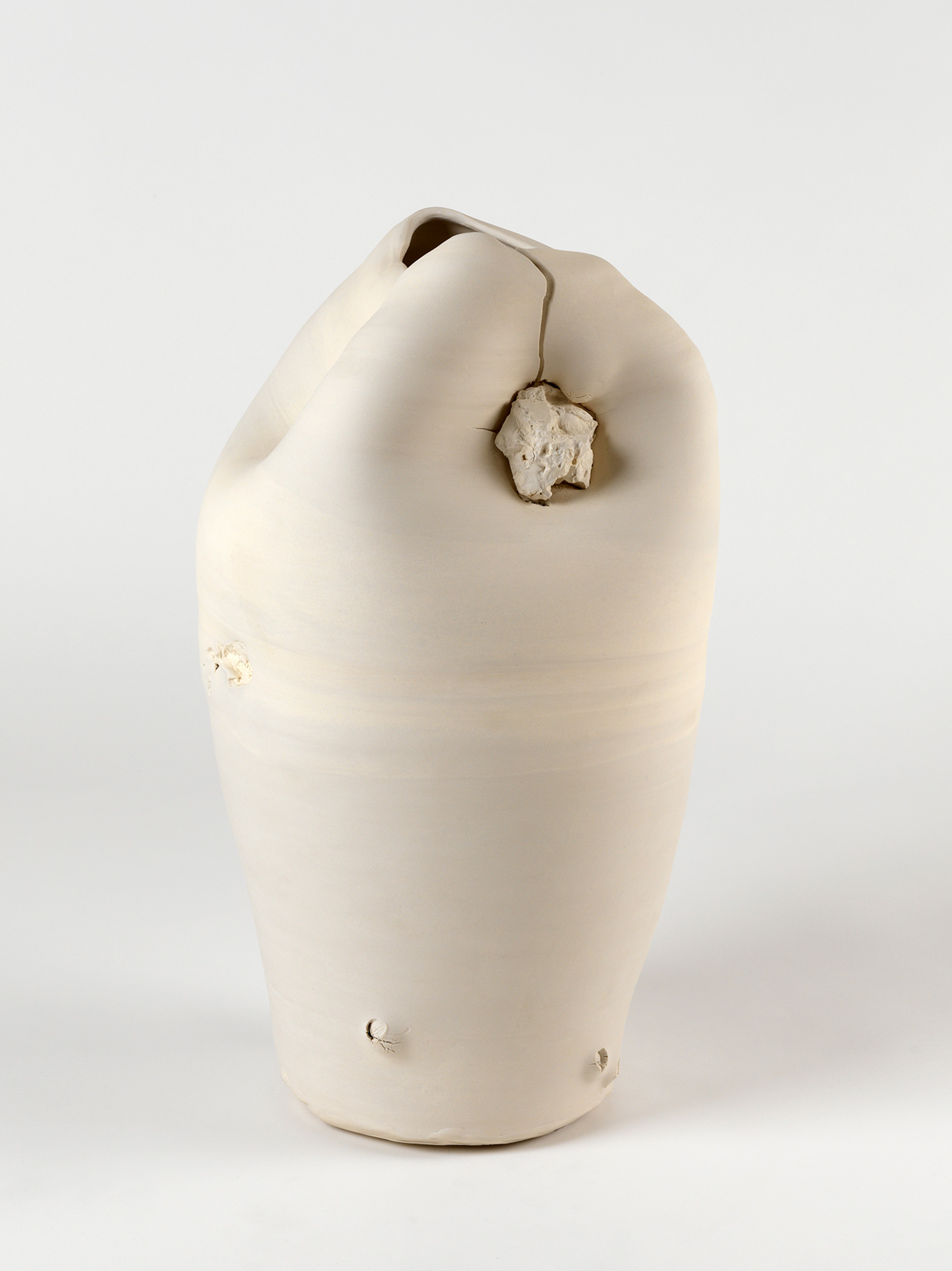
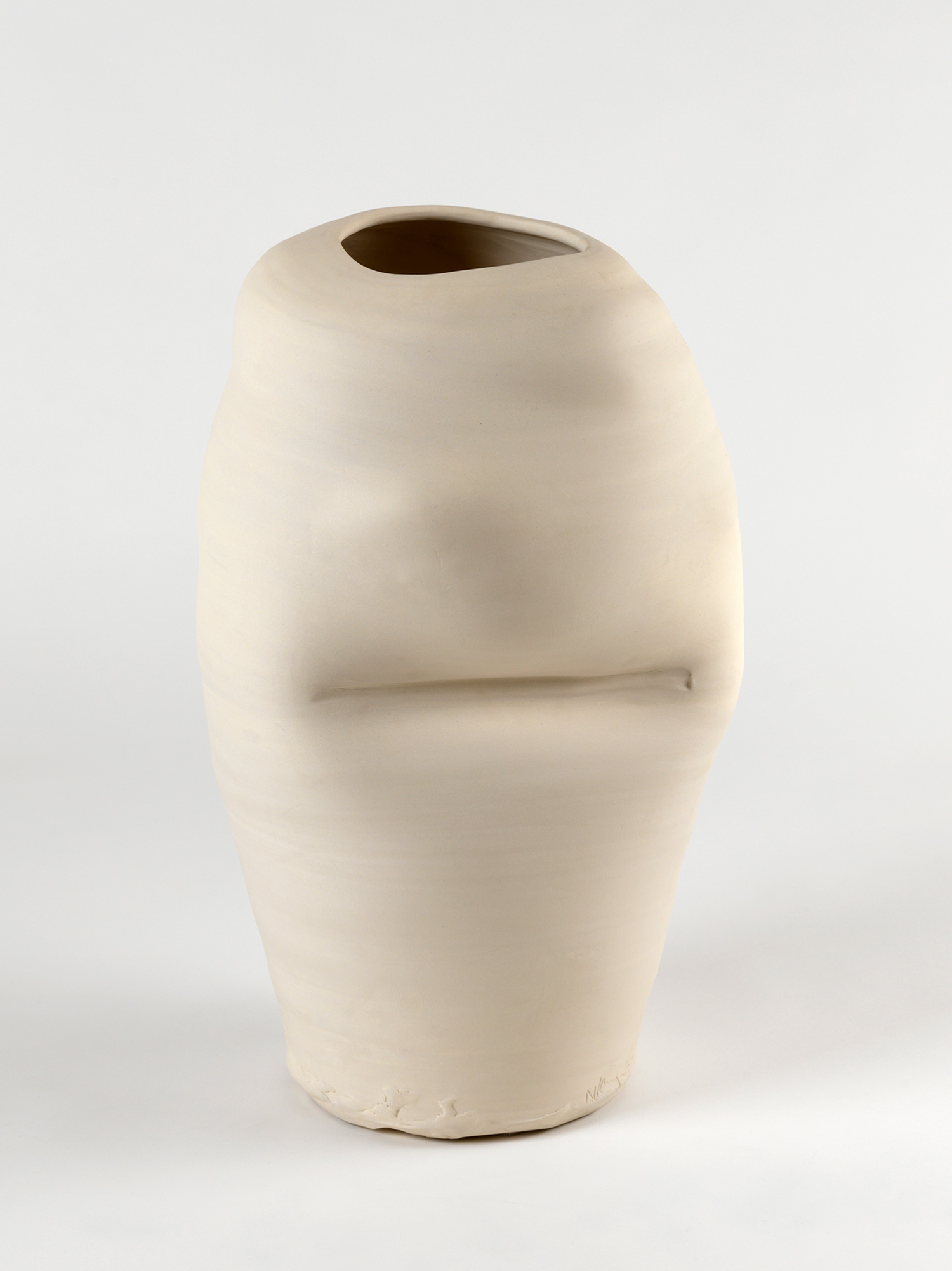
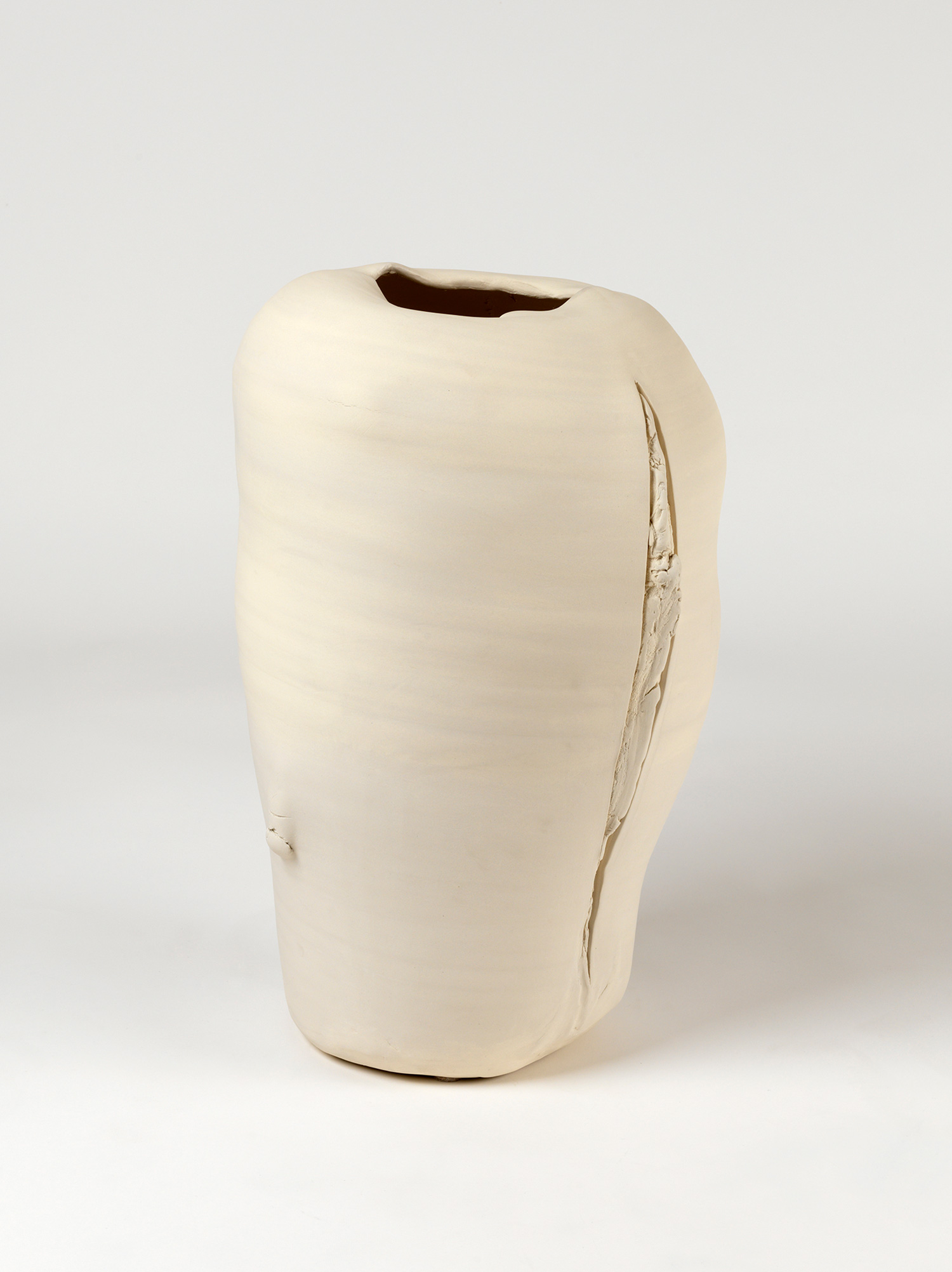
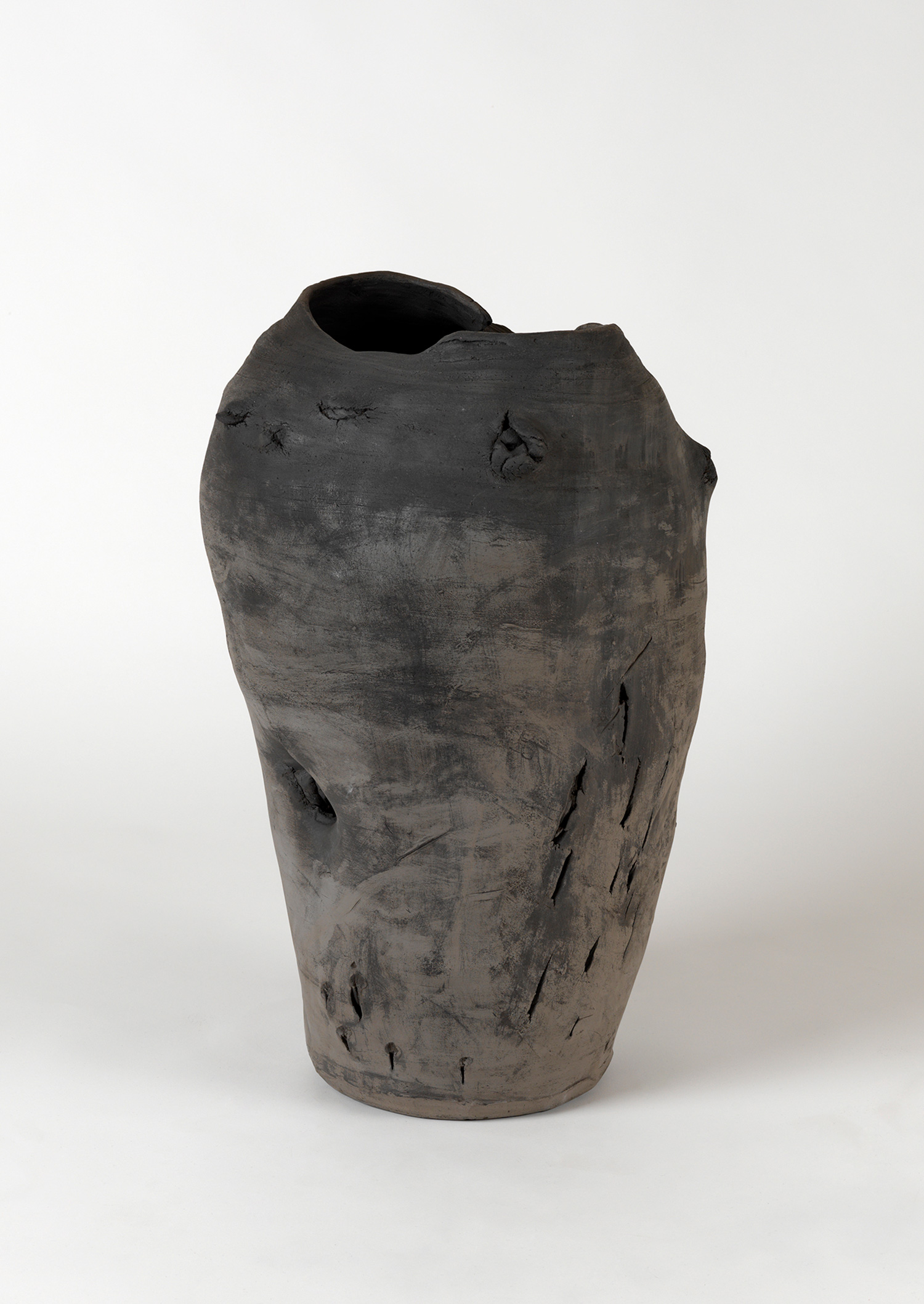
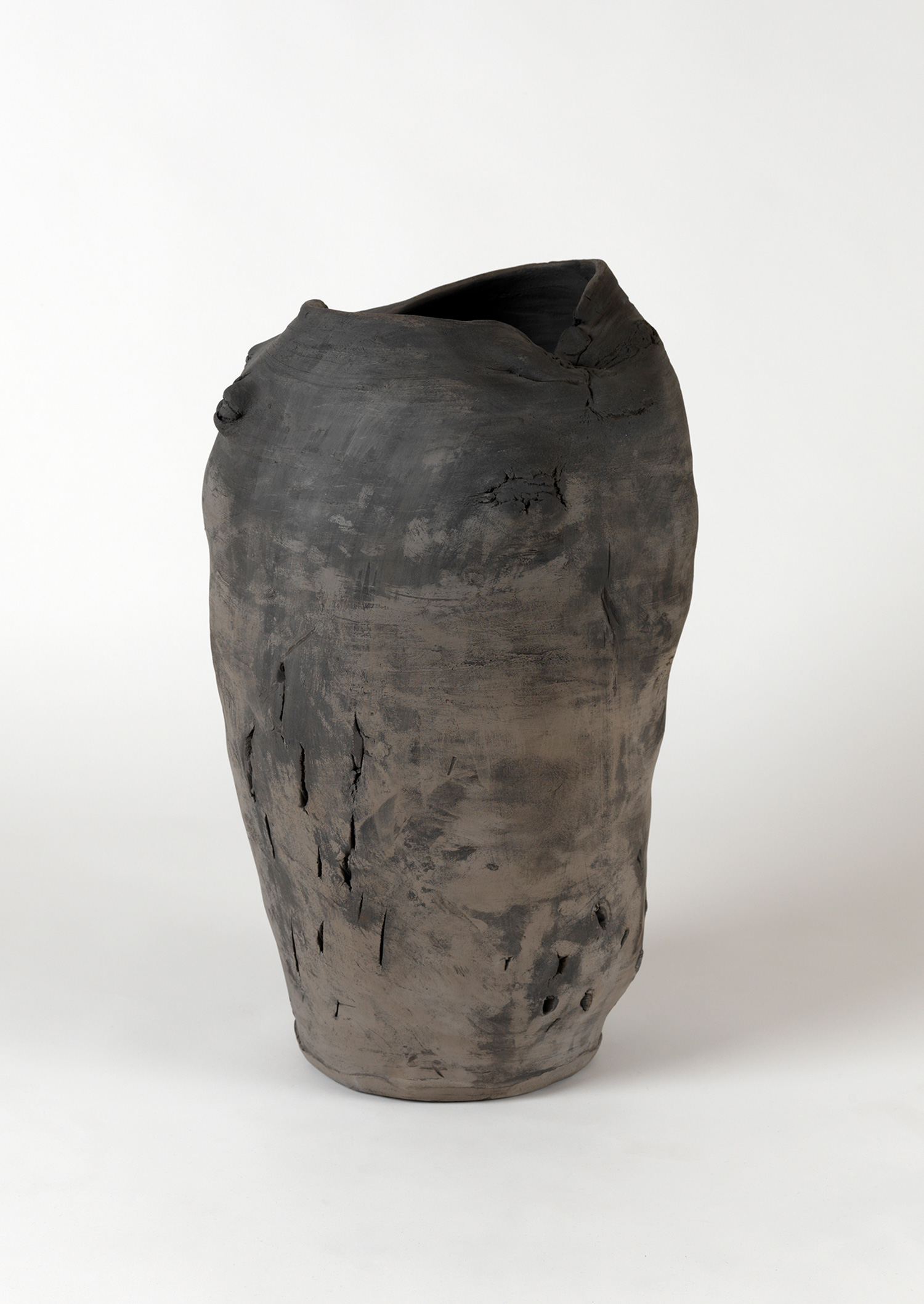
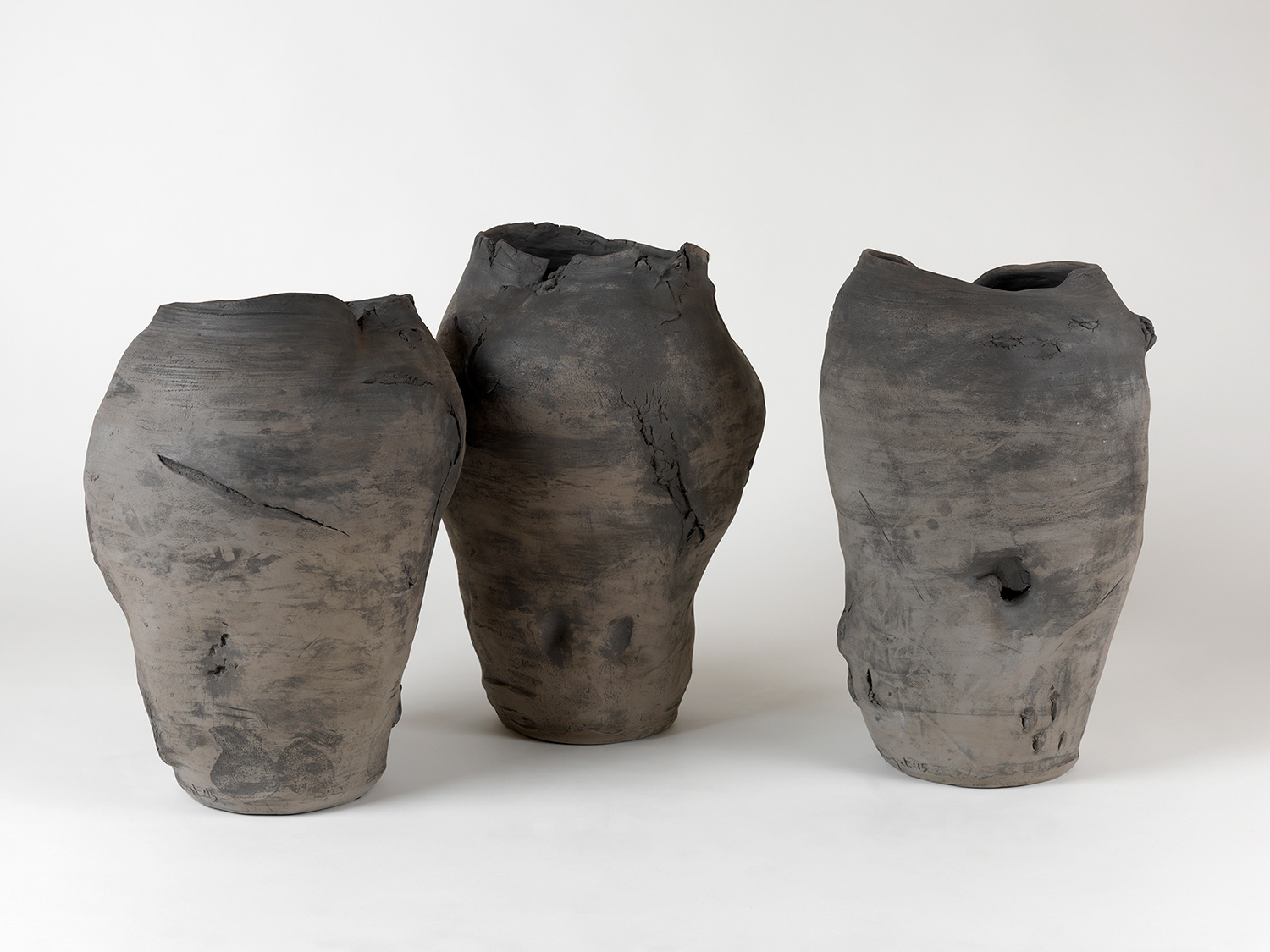
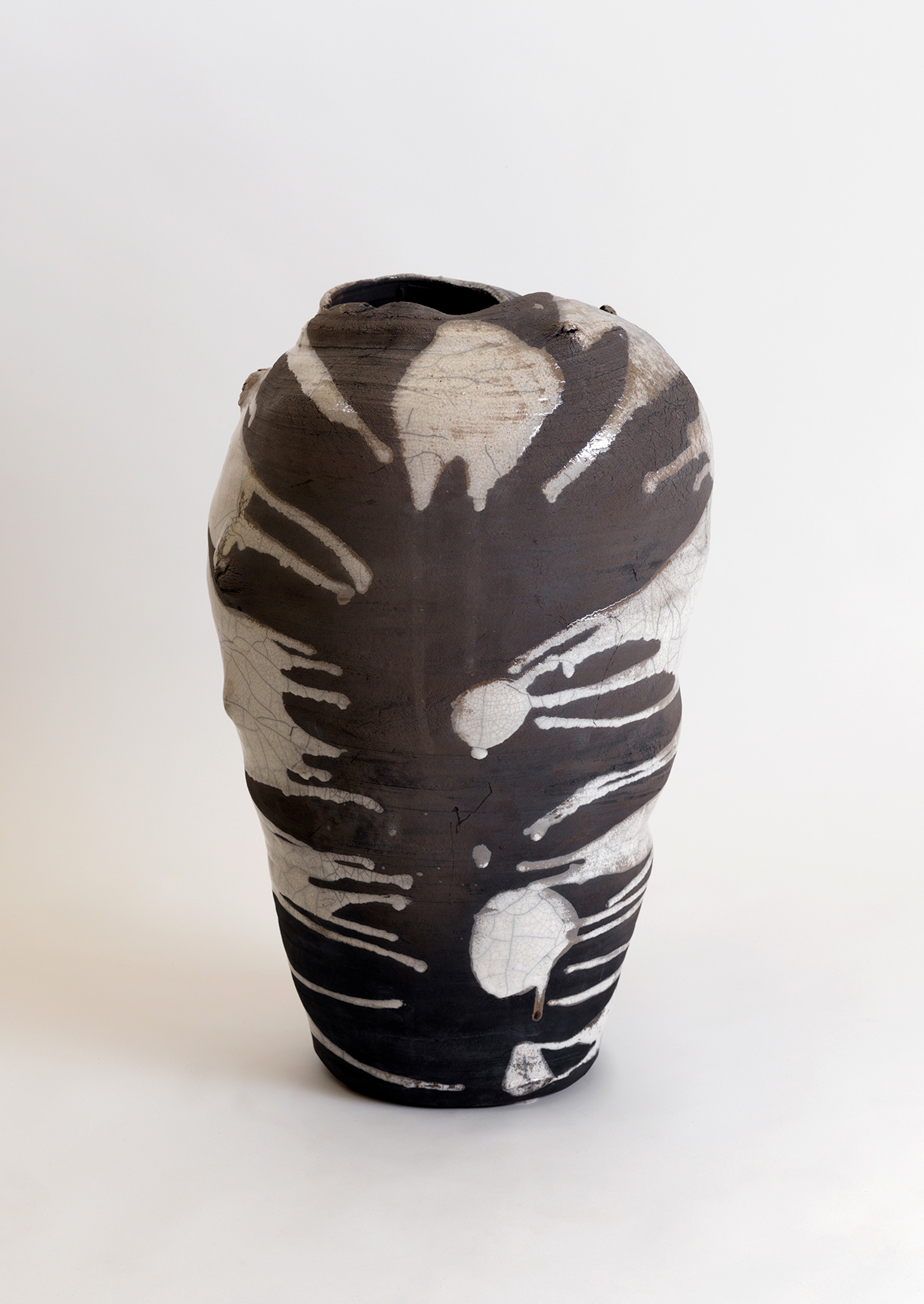
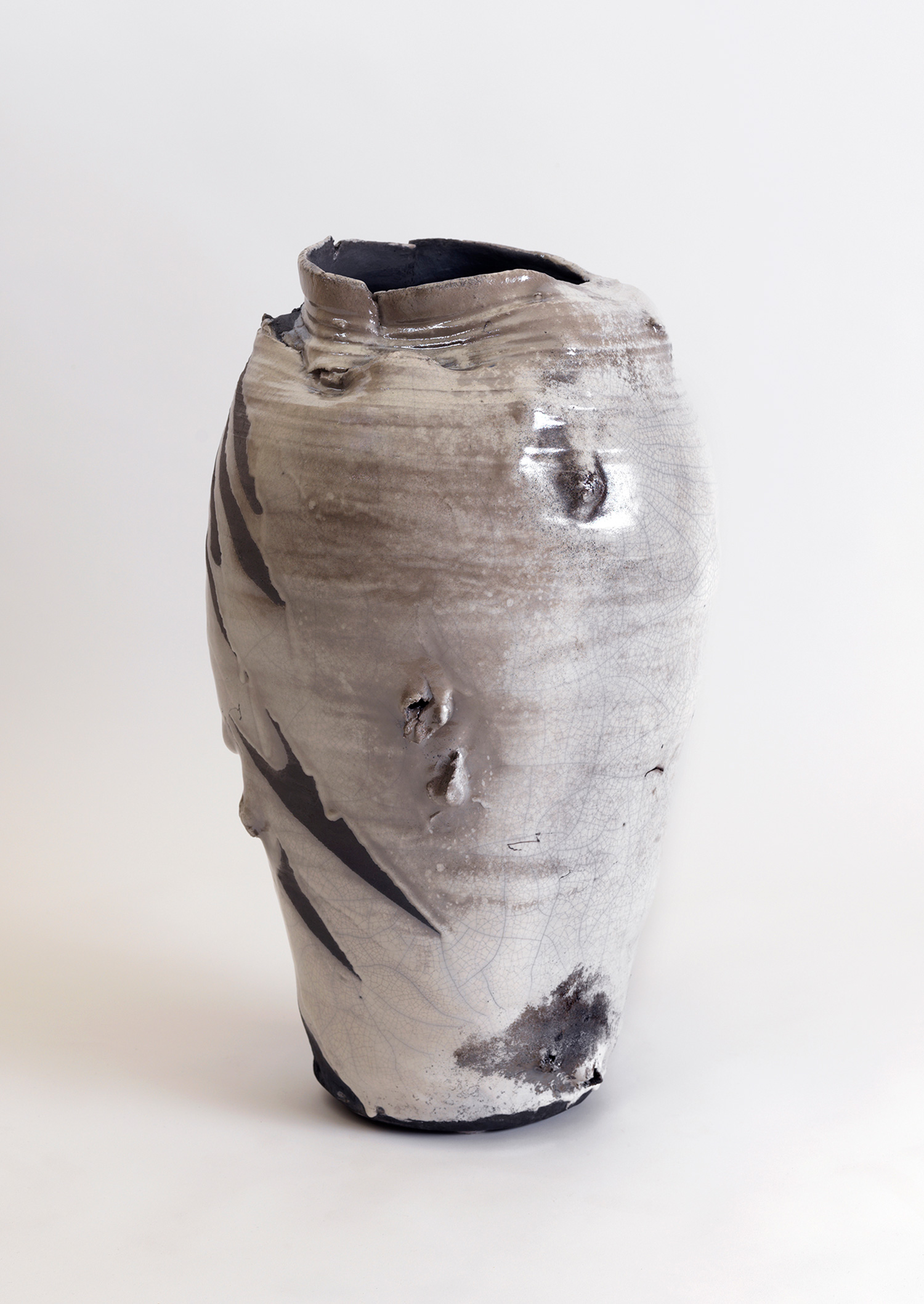
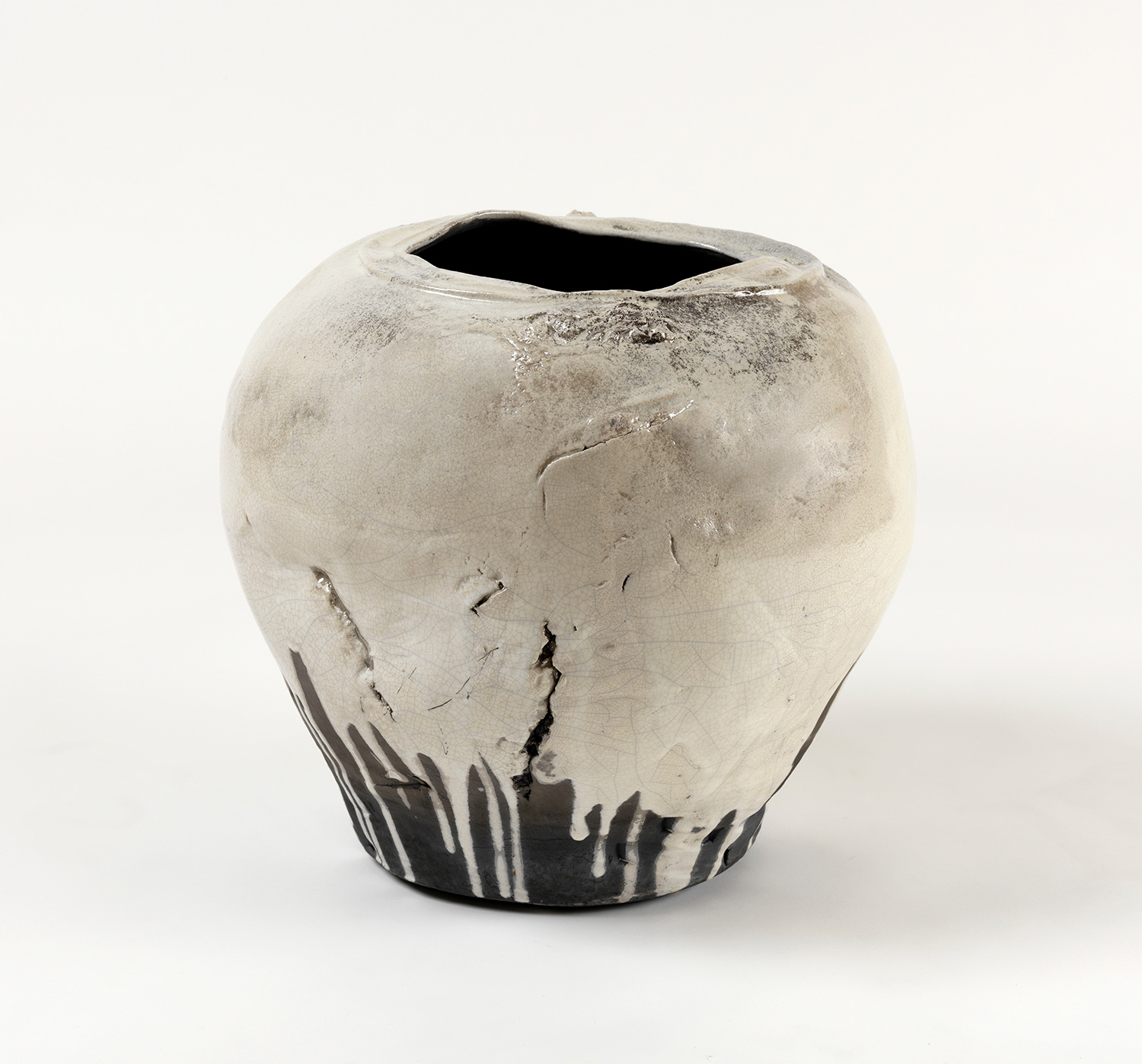
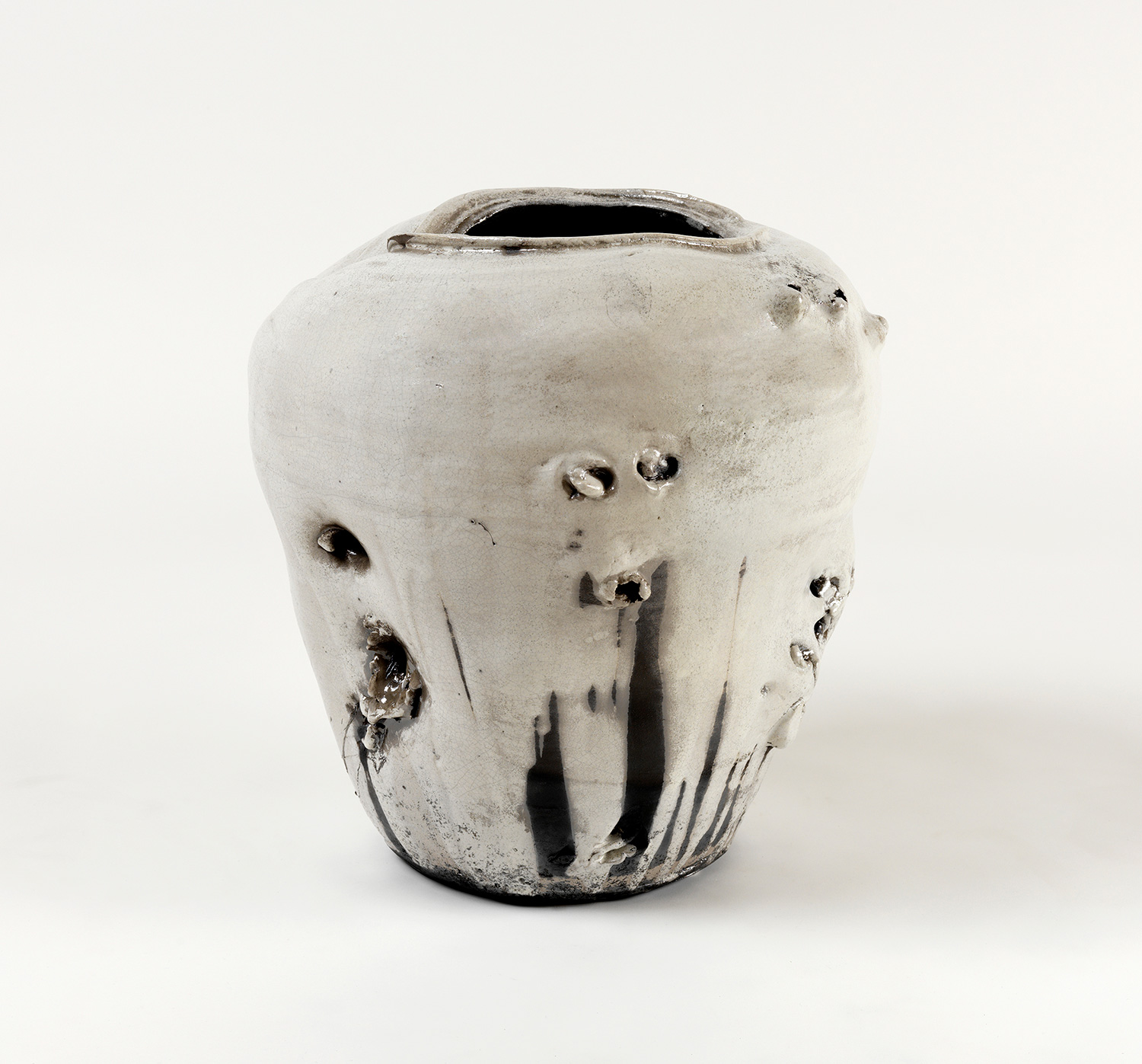
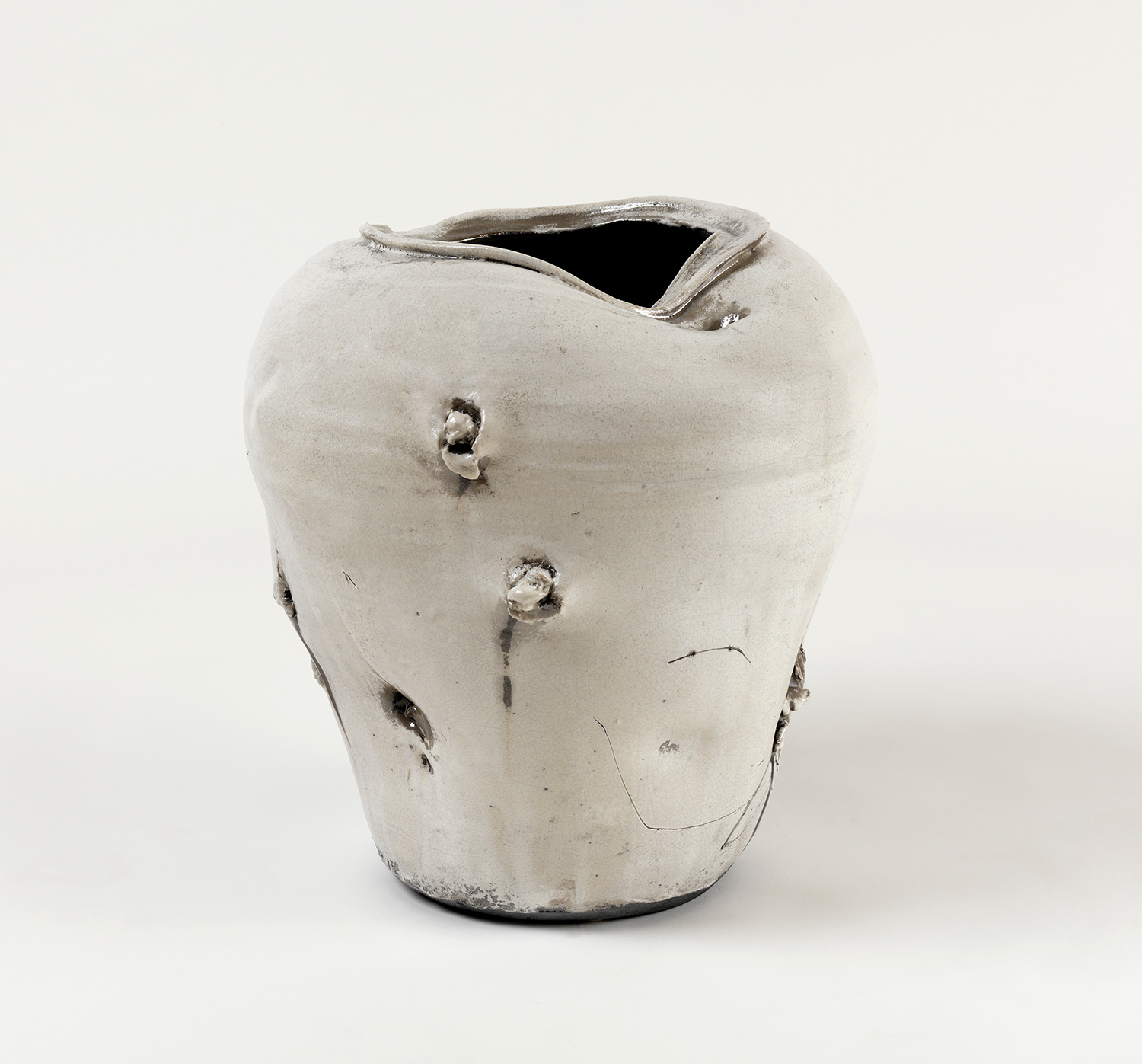
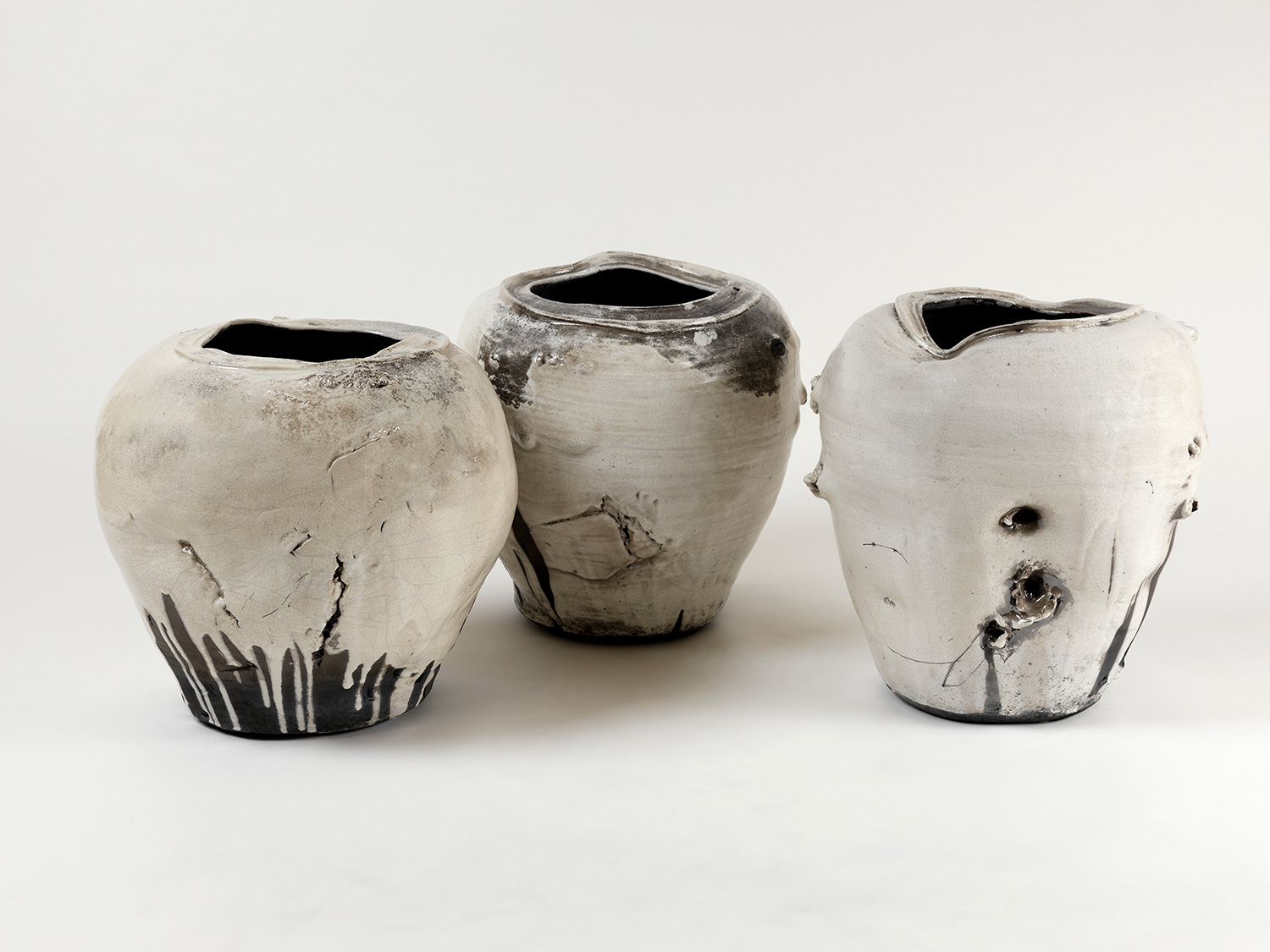
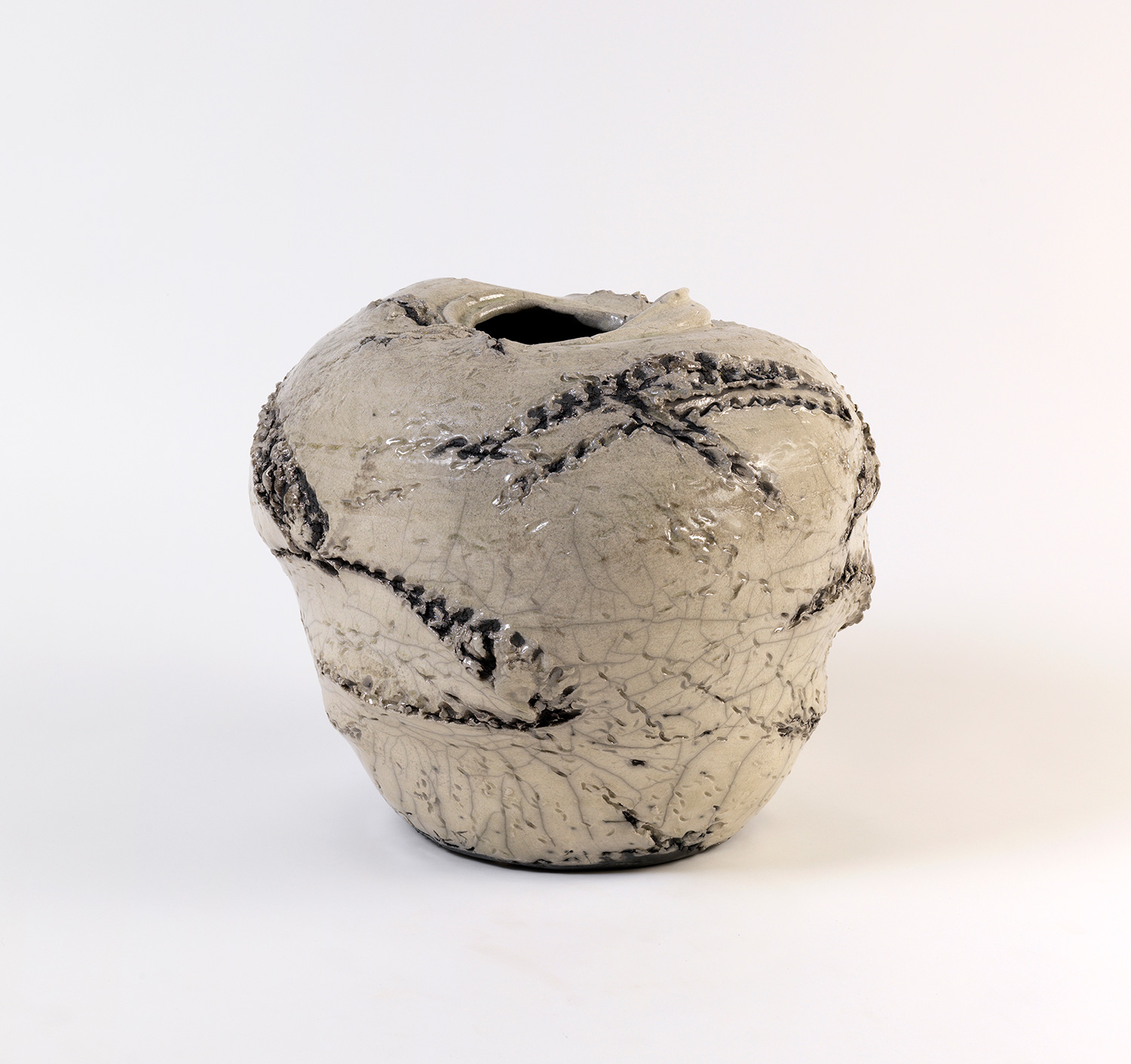
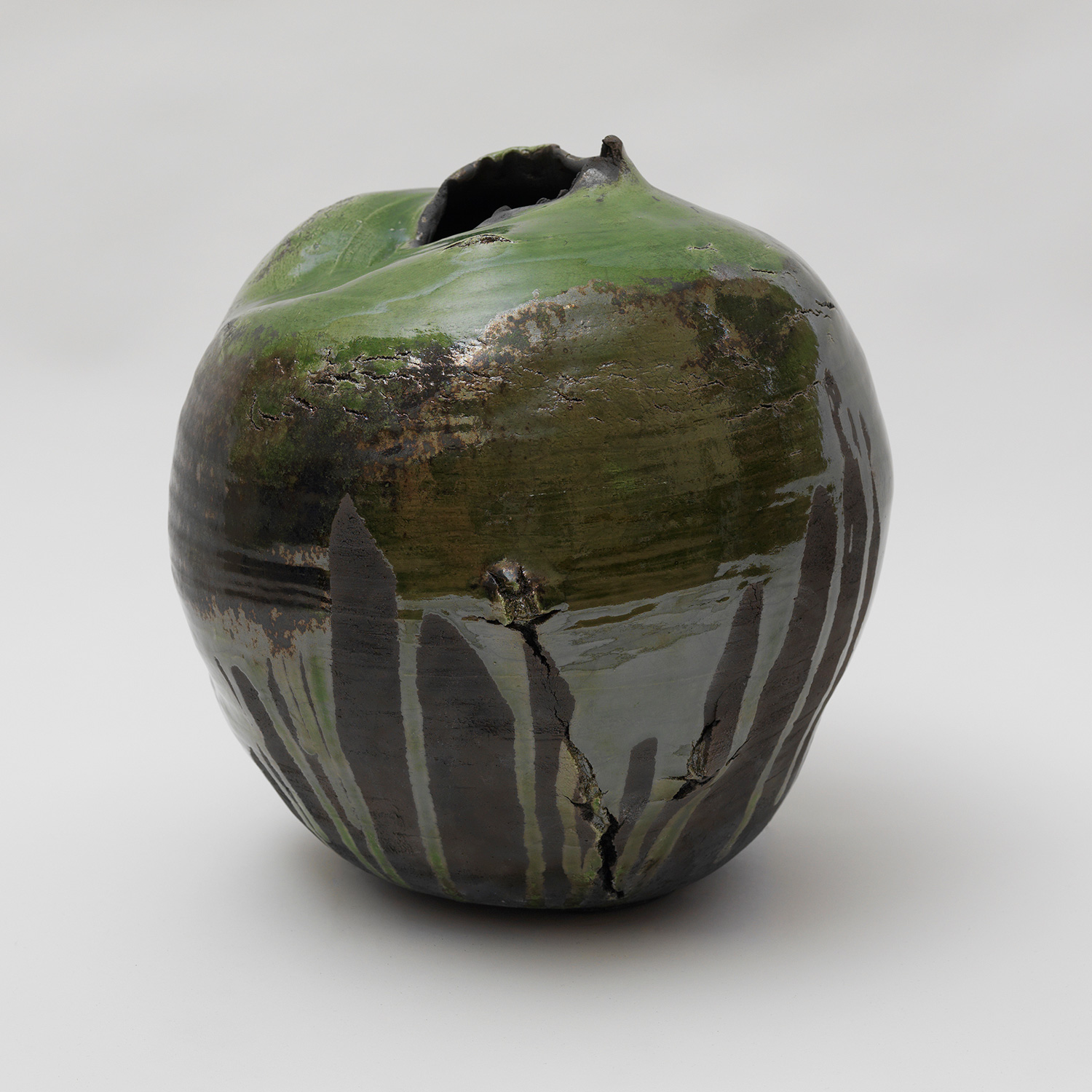
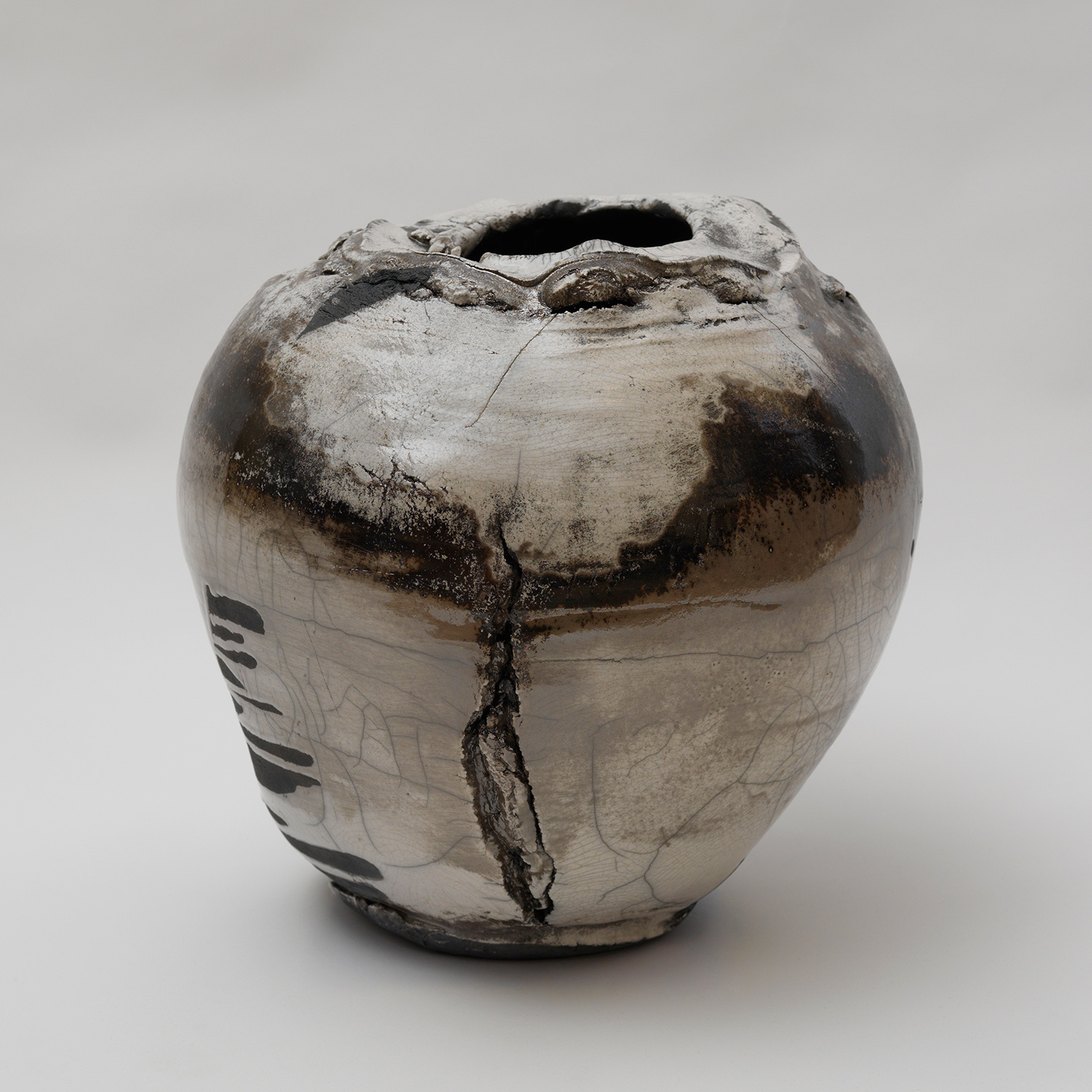
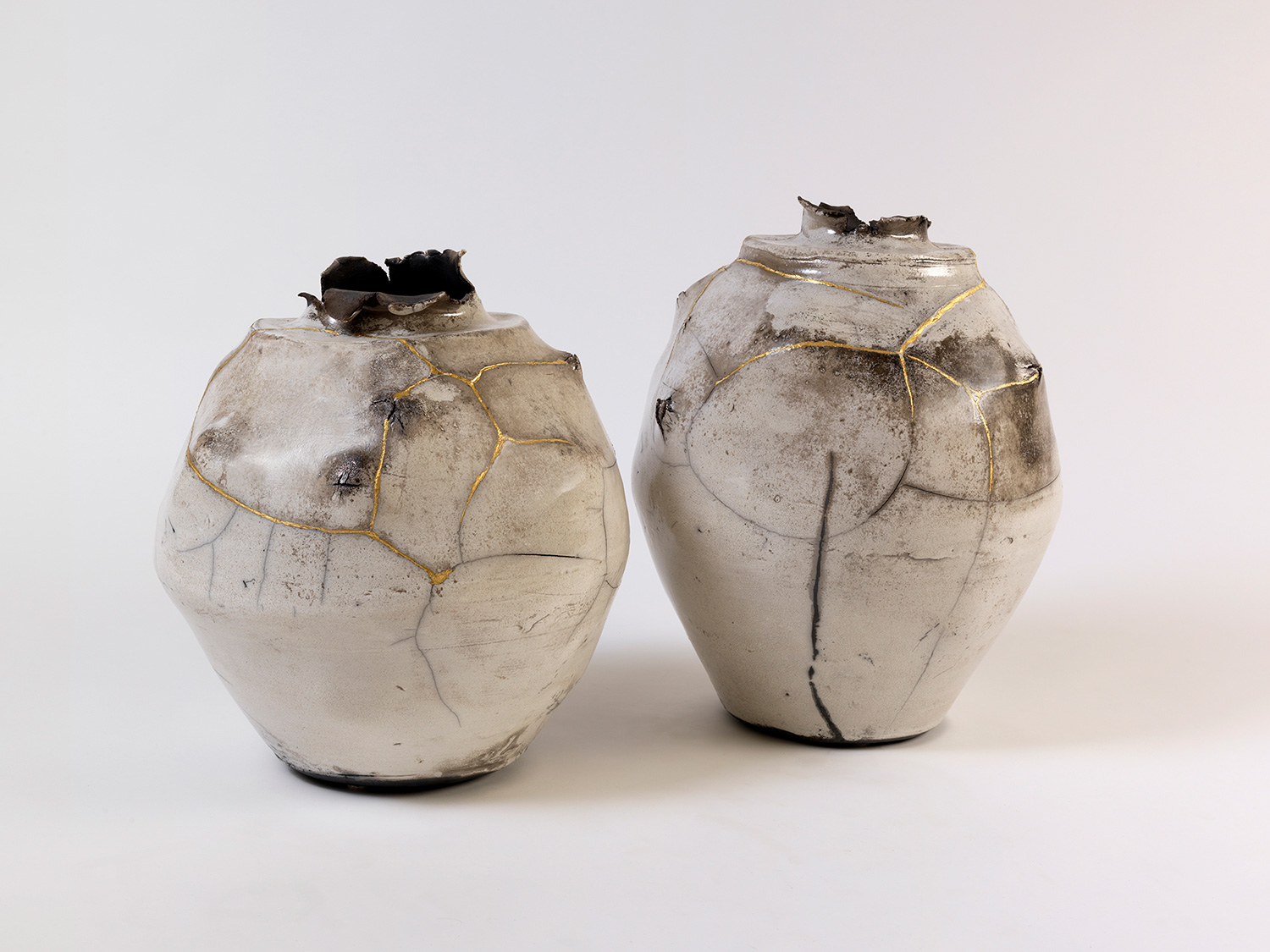
A series of 28 monumental vessels (approx. 60 cm)—the scale of a human torso. While their silhouettes recall classical vases, these forms transcend function, standing as sentient figures. Each bears the mark of violation: cracks like lightning forks, folds mimicking scar tissue, punctures sutured with care, or collapses frozen mid-descent.
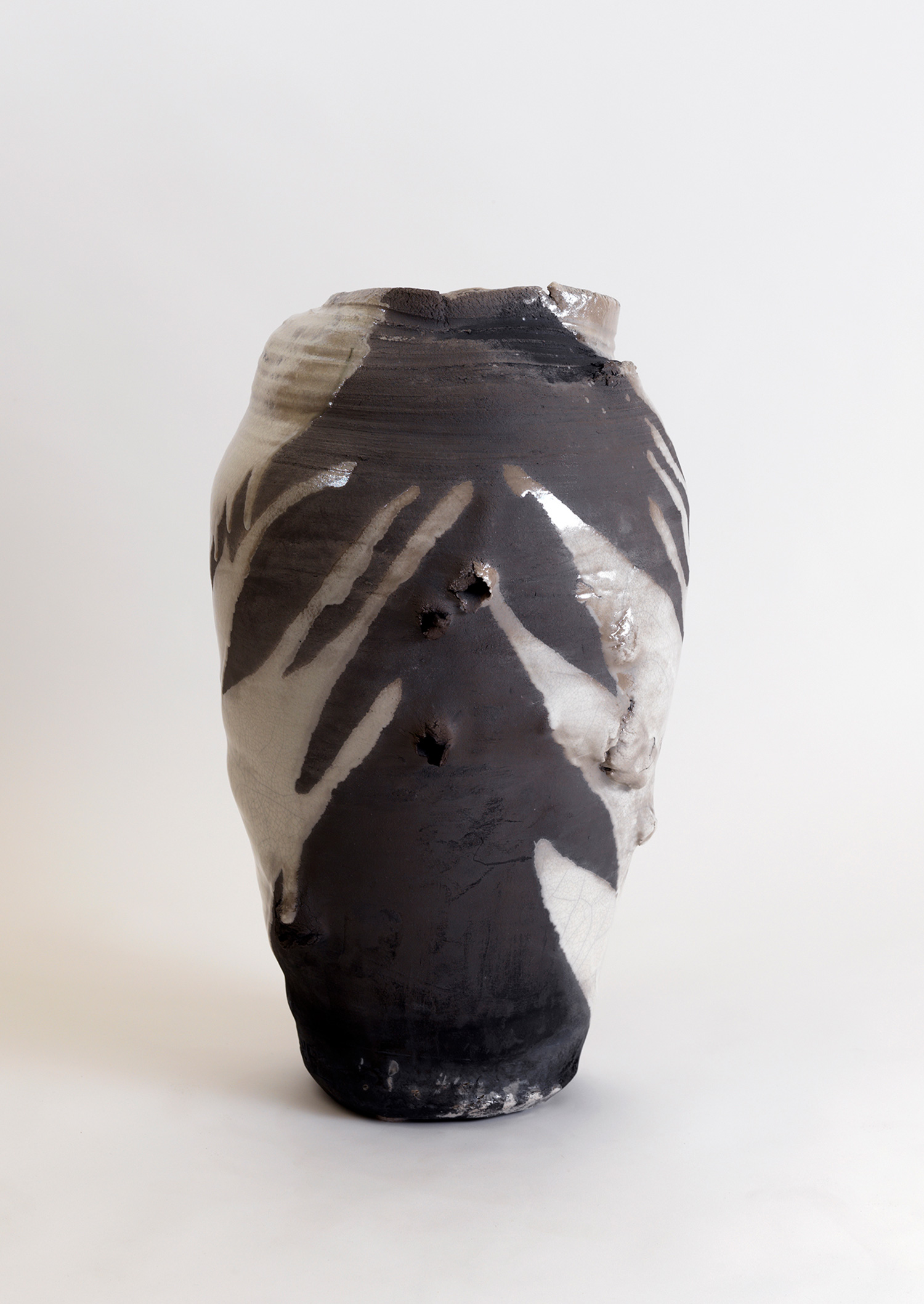
Eleven emerge in unglazed porcelain, their pallid surfaces exposed—a congregation of wounded bodies displaying pearlescent scars. The remaining pieces, stoneware baptized in raku’s fire, wear the evidence of their ordeal: smoke-stained fissures and glaze fractures where heat wrote its chaotic epilogue.
The process begins with the wheel’s hypnotic turn, chasing perfect symmetry—only to betray it. Clay is coerced past reason: hollowed from within, gashed from without, yet stubbornly holding its form. What remains is not ruin, but a testament—a cavity that breathes, a wound that speaks.
This is work of paradox: brutality cradling fragility, violence yielding beauty. Resilience lives in every scar. Like skin, clay remembers.